Central Africa(UN: Eastern Africa)
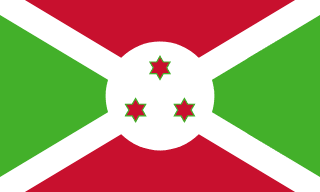
Burundi
Republic of Burundi
A small, densely populated country of hills and lakes with a long monarchy, whose modern history has been shaped by mass violence between and within Hutu and Tutsi political identities.
Scroll or pinch to zoom · drag to pan · borders: Natural Earth 1:50m
Burundi in pictures
Flag, landscapes, landmarks and wildlife you can meet in the games. Photographs come from each subject’s Wikipedia article.

Flag
Flag of Burundi
National flag
- Lake Tanganyika
Landscape
Lake Tanganyika
A real place in Burundi
- Kibira National Park
Landmark
Kibira National Park
Mountain rainforest at the very top of the Nile watershed.
- Gishora drum sanctuary
Landmark
Gishora drum sanctuary
Home of the royal drummers, whose ritual dance is world heritage.
- Gitega
City
Gitega
Capital of Burundi
Capital
Gitega
Population
14,390,003
World Bank, 2025
Area
27,834 km²
Currency
Burundian franc
GDP per person
$234
Current US$, 2025
Life expectancy
63.8 yrs
World Bank, 2024
Urban population
25.7%
UN member
Yes
Quick facts
Did you know?
Lake Tanganyika holds roughly 16% of the world's available fresh water.
Kirundi is spoken by nearly the whole population, unusual for the region.
Your route
Where to start with Burundi
Every chapter above begins with the essentials and then lets you keep going deeper — four levels of depth, or your own question, researched from this country's reference data and our sourced library.
Go deeper: Orientation of Burundi
Researched live from this country's reference data and our library. Keep pressing to go further, or ask your own question.
Enjoying this without interruptions?
Go ad-free across the whole of MOTHERLAND from £0.99 a month. Creating a free account takes a moment.
Reference figures come from the World Bank Open Data API and the ISO 3166 country dataset, each shown with its year. Historical and cultural text is written by our editors and marks contested dating where scholars disagree. The "go deeper" chapters are generated live by Africa AI from that same reference data and our sourced library — check them before quoting. Borders shown are for orientation and do not imply a position on any dispute.