West Africa(UN: Western Africa)
Benin
Republic of Benin
Home of the Kingdom of Dahomey and of Vodun, and the country where sub-Saharan Africa's first negotiated handover of power from a dictatorship took place in 1991.
Scroll or pinch to zoom · drag to pan · borders: Natural Earth 1:50m
Benin in pictures
Flag, landscapes, landmarks and wildlife you can meet in the games. Photographs come from each subject’s Wikipedia article.
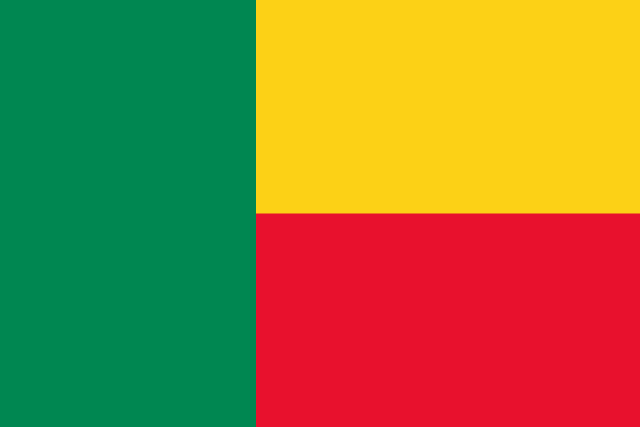
Flag
Flag of Benin
National flag
- Ganvie
Landscape
Ganvie
A real place in Benin
- Ganvié stilt village
Landmark
Ganvié stilt village
A whole town of 20,000 people built on stilts over a lagoon.
- Royal Palaces of Abomey
Landmark
Royal Palaces of Abomey
Twelve kings of Dahomey built palaces here, with walls of story reliefs.
- Pendjari National Park
Landmark
Pendjari National Park
One of the last homes of West Africa's lions.
- Porto-Novo
City
Porto-Novo
Capital of Benin
Capital
Porto-Novo
Population
14,814,460
World Bank, 2025
Area
112,622 km²
Currency
West African CFA franc
GDP per person
$1,658
Current US$, 2025
Life expectancy
61 yrs
World Bank, 2024
Urban population
53.4%
UN member
Yes
Quick facts
Did you know?
Dahomey's army included a corps of women soldiers known abroad as the Dahomey Amazons.
In 2021 France returned 26 royal treasures looted from Abomey in 1892.
Your route
Where to start with Benin
Every chapter above begins with the essentials and then lets you keep going deeper — four levels of depth, or your own question, researched from this country's reference data and our sourced library.
Go deeper: Orientation of Benin
Researched live from this country's reference data and our library. Keep pressing to go further, or ask your own question.
Enjoying this without interruptions?
Go ad-free across the whole of MOTHERLAND from £0.99 a month. Creating a free account takes a moment.
Reference figures come from the World Bank Open Data API and the ISO 3166 country dataset, each shown with its year. Historical and cultural text is written by our editors and marks contested dating where scholars disagree. The "go deeper" chapters are generated live by Africa AI from that same reference data and our sourced library — check them before quoting. Borders shown are for orientation and do not imply a position on any dispute.