East Africa(UN: Eastern Africa)
Rwanda
Republic of Rwanda
A dense, hilly country whose 1994 genocide against the Tutsi killed around a million people in a hundred days, and which has since rebuilt with tight central control.
Scroll or pinch to zoom · drag to pan · borders: Natural Earth 1:50m
Rwanda in pictures
Flag, landscapes, landmarks and wildlife you can meet in the games. Photographs come from each subject’s Wikipedia article.
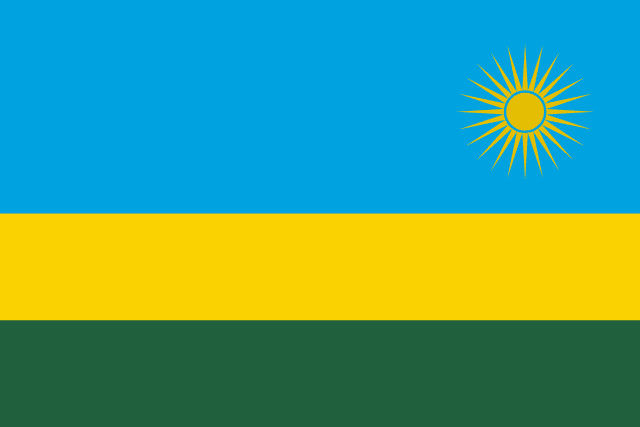
Flag
Flag of Rwanda
National flag
- Volcanoes National Park
Landscape
Volcanoes National Park
A real place in Rwanda
- Lake Kivu shore
Landmark
Lake Kivu shore
A lake holding huge volumes of dissolved gas beneath its calm surface.
- Volcanoes National Park
Landmark
Volcanoes National Park
Where Dian Fossey studied mountain gorillas for eighteen years.
- Nyungwe canopy walk
Landmark
Nyungwe canopy walk
A 60-metre-high bridge over one of Africa's oldest forests.
- Mountain gorilla
Wildlife
Mountain gorilla
Fewer than 1,100 remain, all in three neighbouring countries.
- Grey crowned crane
Wildlife
Grey crowned crane
Uganda's national bird, with a golden crown of stiff feathers.
- Kigali
City
Kigali
Capital of Rwanda
Capital
Kigali
Population
14,569,341
World Bank, 2025
Area
26,338 km²
Currency
Rwandan franc
GDP per person
$1,124
Current US$, 2025
Life expectancy
68 yrs
World Bank, 2024
Urban population
30.9%
UN member
Yes
Quick facts
Did you know?
Rwanda banned single-use plastic bags back in 2008.
Umuganda closes the country for community work on the last Saturday of each month.
Your route
Where to start with Rwanda
Every chapter above begins with the essentials and then lets you keep going deeper — four levels of depth, or your own question, researched from this country's reference data and our sourced library.
Go deeper: Orientation of Rwanda
Researched live from this country's reference data and our library. Keep pressing to go further, or ask your own question.
Enjoying this without interruptions?
Go ad-free across the whole of MOTHERLAND from £0.99 a month. Creating a free account takes a moment.
Reference figures come from the World Bank Open Data API and the ISO 3166 country dataset, each shown with its year. Historical and cultural text is written by our editors and marks contested dating where scholars disagree. The "go deeper" chapters are generated live by Africa AI from that same reference data and our sourced library — check them before quoting. Borders shown are for orientation and do not imply a position on any dispute.